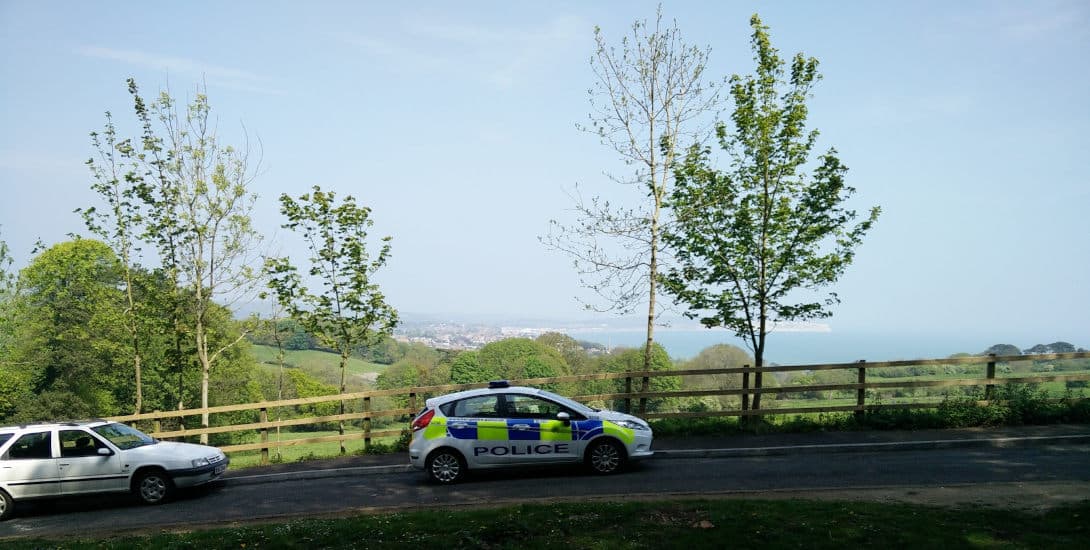
No. There is no bridge or tunnel to the Isle of Wight, so you can't drive all the way there. You can take your car across, though: three car ferry routes cross the Solent all year, taking between about 40 minutes and an hour.
The three car ferry routesSection titled The three car ferry routes
| Route | Operator | Crossing | Best if you're coming from |
|---|---|---|---|
| Portsmouth – Fishbourne | Wightlink | about 45 min | London, the south-east, Sussex (A3/M27) |
| Southampton – East Cowes | Red Funnel | about 1 hour | The Midlands and north via the M3 or A34 |
| Lymington – Yarmouth | Wightlink | about 40 min | Dorset, Bournemouth and the south-west |
All three run all year round, more often in summer, and carry cars, vans, motorbikes, bikes and foot passengers. Crossing times can be longer in bad weather or during works.
Portsmouth to Fishbourne (Wightlink)Section titled Portsmouth to Fishbourne (Wightlink)
The busiest car route. It lands at Fishbourne, between Ryde and Wootton, which puts you about 15 minutes from Ryde and Newport and well placed for the east of the island (Ryde, Seaview, Bembridge, Sandown and Shanklin).
Southampton to East Cowes (Red Funnel)Section titled Southampton to East Cowes (Red Funnel)
The longest crossing, but often the most convenient if you're coming down the M3. East Cowes is close to Osborne House and about 15 minutes from Newport. West Cowes is across the river: use the Floating Bridge chain ferry for foot passengers and cars, or drive round via Newport.
Lymington to Yarmouth (Wightlink)Section titled Lymington to Yarmouth (Wightlink)
The shortest car crossing, landing in the pretty harbour town of Yarmouth in the west of the island. It's the obvious choice for the Needles, Alum Bay, Freshwater and Totland, and for Colwell Bay.
Foot passengersSection titled Foot passengers
Without a car there are three faster options: Wightlink's FastCat from Portsmouth Harbour to Ryde Pier (about 22 minutes), Red Funnel's Red Jet from Southampton to West Cowes, and the Hovertravel hovercraft from Southsea to Ryde (about 10 minutes). None of them needs ID (no passport needed).
Booking tipsSection titled Booking tips
- Book early for summer and festivals. Car spaces on Saturdays in July and August, bank holidays and the Isle of Wight Festival weekend sell out, and prices are highest then.
- Times matter more than days. Early morning and late evening sailings are usually cheapest.
- Changing a booking. Both operators allow changes, sometimes for a fee depending on your ticket type. Check the terms when you book.
From experienceSection titled From experience
For a couple of years I lived near London on a narrowboat. When a sale of the boat fell through I was stuck there for a month, and turned up at Red Funnel's terminal a month later than booked expecting to pay again. They put me on the next ferry without charging. Don't count on it, but it's worth asking at the booth before you buy a new ticket.
Driving on the islandSection titled Driving on the island
The island is about 23 miles across and 13 miles north to south, so nowhere is more than about an hour's drive from anywhere else. Roads are mostly A and B roads with no motorways or dual carriageways, and summer traffic around Newport, Ryde and the ferry ports can be slow.
Scenic drivesSection titled Scenic drives
- Military Road (A3055) runs along the south-west coast from Freshwater Bay to Chale, past Compton and Brook, with sea views almost all the way. Cliff erosion means sections are periodically closed for repairs, including a weekday closure near Grange Chine in spring 2026, so check Island Roads before setting out.
- Ventnor to St Lawrence follows the Undercliff, a sheltered strip of sub-tropical vegetation below the cliffs. The coast road beyond, Undercliff Drive between St Lawrence and Niton, has been closed to through traffic since landslips in 2014, so traffic between Ventnor and Niton goes inland via Whitwell.
- The Downs roads across the centre of the island give views over both coasts.
ParkingSection titled Parking
Most towns and beaches have Isle of Wight Council pay and display car parks, and many accept payment by app. Charges are set each year by the council, and the busiest beach car parks fill early on sunny summer days.
Without a carSection titled Without a car
Southern Vectis buses serve every town and many villages, with open-top tourist buses (including the Needles Breezer) in summer. The Island Line railway runs between Ryde Pier Head and Shanklin. If you're only visiting Ryde, Sandown and Shanklin, you can manage easily without a car.
For planning a longer stay, see how many days you need on the Isle of Wight and our guides to beaches, theme parks and crazy golf.