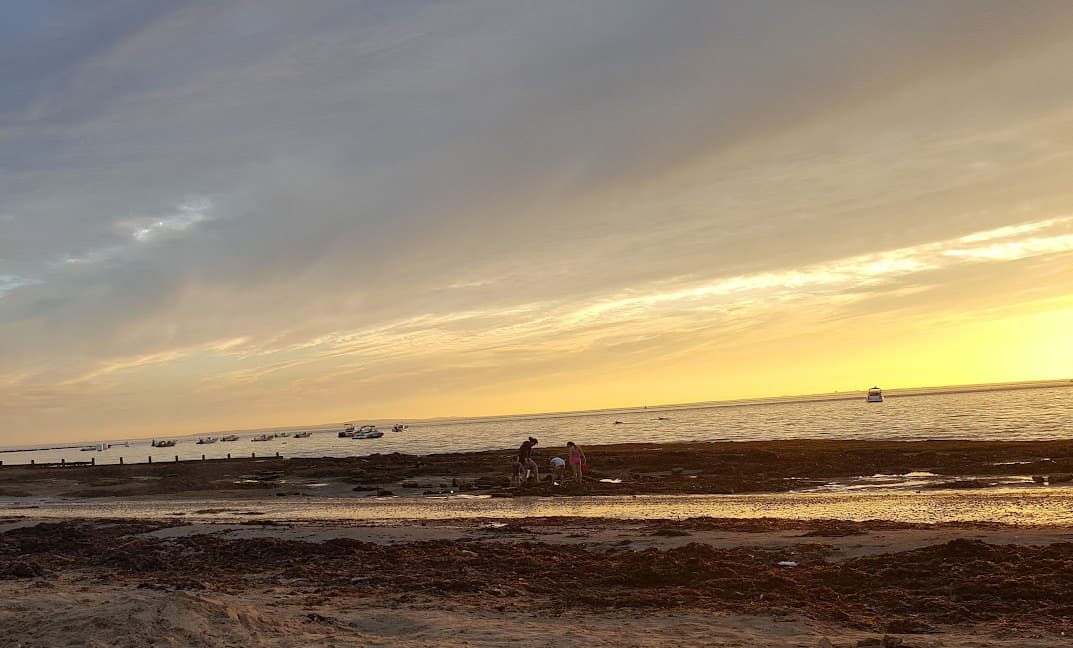
Brook Bay is our pick for shell collecting on the Isle of Wight. It is a wide, quiet beach on the south-west coast, and on a low tide we have found everything from scallop shells to razor clams there. Our children turn it into a competition to see who can collect the most, and because dogs are allowed all year, the whole family can come.
If Brook is too far, Compton Bay next door, Whitecliff Bay near Bembridge, Yaverland at Sandown and Seagrove Bay at Seaview are all worth a look. The details for each are below.
Where to find shells on the Isle of WightSection titled Where to find shells on the Isle of Wight
1. Brook BaySection titled 1. Brook Bay
Brook Bay sits between Hanover Point and Brook Chine on the Military Road. It is quieter than Compton, the beach is broad at low tide and the strandline is often thick with shells after rough weather. The same stretch is one of the best places on the island for fossil hunting, so keep an eye out for fossil wood and dinosaur bone as you go.
- Parking: National Trust car park at Brook Chine, paid through the JustPark app (free for National Trust members who register their card).
- Dogs: allowed all year.
- Toilets: the nearest are at the National Trust's Hanover Point car park.
- Access: steps down from the cliff top. Not suitable for pushchairs.
2. Compton BaySection titled 2. Compton Bay
Compton is the long sandy beach west of Hanover Point, under the chalk of Afton Down. It is busier than Brook, especially with surfers in summer, but it is a big beach and the strandline is long. Its bathing water was rated Excellent in 2025.
- Parking: National Trust car parks at Hanover Point and Compton Chine (JustPark). No overnight parking.
- Dogs: allowed all year between Hanover Point and Brook Chine; banned west of the Compton Bay car park from 15 May to 15 September.
- Facilities: toilets, including a Changing Places cubicle, at Hanover Point.
3. Whitecliff Bay, BembridgeSection titled 3. Whitecliff Bay, Bembridge
Whitecliff Bay is a Site of Special Scientific Interest because its rock layers stand on end, and those Eocene sands and clays are a good place to find fossil shells as well as modern ones. The beach is sand and shingle, about half a mile long, and stays shallow a long way out.
- Access: only by two steep concrete paths from the holiday parks above. Not suitable for pushchairs or wheelchairs.
- Parking: limited, at the holiday park above the beach.
- Dogs: allowed all year.
4. Yaverland, SandownSection titled 4. Yaverland, Sandown
Yaverland is the quieter northern end of Sandown Bay, with a council car park right behind the beach. Its bathing water was rated Excellent in 2025, and Dinosaur Isle is a short walk along the seafront if you want a rainy-day backup.
- Dogs: allowed all year on the beach east of the car park; banned from the rest of Yaverland from 1 May to 30 September.
5. Seagrove Bay, SeaviewSection titled 5. Seagrove Bay, Seaview
Seagrove is a small sandy bay on the north-east coast between Seaview and Priory Bay, rated Excellent for bathing water in 2025. It faces the Solent, so it is far more sheltered than the south-west beaches and an easy place for small children to search the waterline.
- Dogs: allowed all year on the quieter outer sections.
Tips for finding good shellsSection titled Tips for finding good shells
- Follow the strandline. The line of seaweed and debris left at the top of the last high tide is where shells collect. Walk it slowly as the tide drops.
- Go after rough weather. A blow from the south-west reshuffles the beaches on that coast and leaves fresh shells and fossils behind.
- Go early. You get first pick of what the overnight tide left, before anyone else has walked it.
- Check the tide times. At Brook and Compton you can get cut off around Hanover Point on a rising tide, and the ledges are slippery.
- Identify what you find. This guidebook is the one we use at home. One of the most common shells on south coast beaches is the slipper limpet, often stuck together in stacks. It is an invasive species, so take as many as you like.
Take empty shells onlySection titled Take empty shells only
Put back anything with a living animal in it. A closed two-part shell such as a mussel or cockle usually still has one inside. Empty shells are fine to collect in small numbers, but do not dig into or take material from the cliffs; at Brook and Compton the National Trust asks visitors not to dig or use tools at all.
For more ideas for a day by the sea, see our guides to rock pooling and things to do on Isle of Wight beaches.
SourcesSection titled Sources
- National Trust: Compton Bay and Downs and fossil hunting at Compton Bay
- OnTheWight: dog-friendly beaches all year round (May 2026)
- County Press: 15 Isle of Wight bathing spots rated good or excellent (Environment Agency 2025 classifications)
- Wikipedia: Whitecliff Bay
- Sussex Wildlife Trust: what can be found on the strandline, shells
- British Geological Survey: collecting beach pebbles, is it legal?