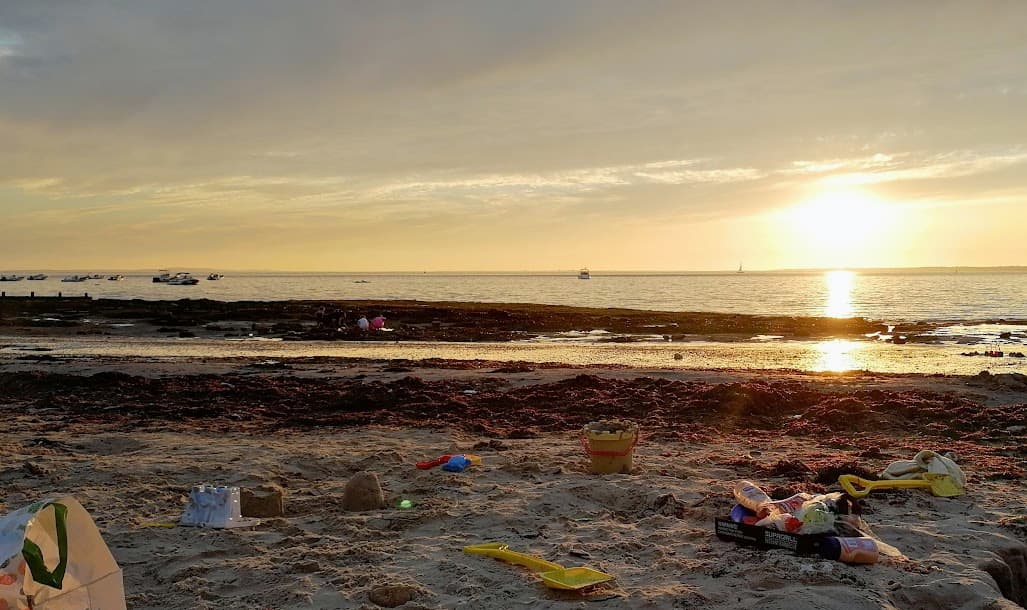
Choose the Isle of Wight for a short break, a family holiday within easy reach of London and the South East, or a trip without a car. Choose Cornwall for a longer holiday, surfing, big Atlantic scenery and far more beaches. The Isle of Wight is closer, smaller and sunnier on average. Cornwall is about nine times bigger and needs more travel, both to get there and once you arrive.
At a glanceSection titled At a glance
| Isle of Wight | Cornwall | |
|---|---|---|
| Size | About 147 sq miles (381 km²) | About 1,375 sq miles (3,562 km²) |
| From London by train | About 1h35 to Portsmouth Harbour, then 22 min FastCat to Ryde | About 5h to 5h30 to Penzance |
| From London by car | Roughly 75 miles to Portsmouth, plus a 45-minute car ferry | Roughly 250 miles to Truro on the M5 and A30 |
| Sunshine (1991 to 2020) | About 5h08 a day, the highest of any UK county | About 4h29 a day |
| Beaches | Around 25 to 60, depending on how coves and chines are counted | Over 300 (Cornwall Council) |
| Coast path | About 70 miles round the island | Several hundred miles of the South West Coast Path |
| Without a car | Easy: one bus network, Island Line train, foot ferries | Harder: long distances between towns |
| Extra cost | Ferry fare | Fuel and longer journey |
Getting thereSection titled Getting there
From London and the South East, the Isle of Wight wins clearly. A train from London Waterloo reaches Portsmouth Harbour in about an hour and a half. The Wightlink FastCat then crosses to Ryde Pier in 22 minutes, so you can be on the island in around two hours. Penzance is around five hours or more from London Paddington.
By car, the Solent crossings are short:
- Portsmouth to Fishbourne: 45 minutes (Wightlink)
- Southampton to East Cowes: about an hour (Red Funnel)
- Lymington to Yarmouth: 40 minutes (Wightlink)
Driving to West Cornwall from London means 250 miles or more, much of it on the A30, which can queue badly on summer Saturdays.
From the Midlands the gap narrows. Birmingham is roughly 150 miles from Portsmouth and roughly 240 from Truro. The Isle of Wight is still the shorter trip, but you add a ferry.
The Isle of Wight has no scheduled passenger flights; Cornwall has Newquay Airport. See can you fly to the Isle of Wight? and can you drive to the Isle of Wight?
Size and getting aroundSection titled Size and getting around
The Isle of Wight is small. Most journeys across it take well under an hour by car, and you can base yourself in one town and reach everything. Southern Vectis buses cover the island, and the Island Line railway runs from Ryde Pier Head to Shanklin, so a car-free holiday is realistic.
Cornwall is about nine times the size of the island and much longer. Moving between the north coast, the south coast and the far west takes real time, and visitors tend to pick one area.
Beaches and coastSection titled Beaches and coast
Cornwall has the edge on numbers and drama: over 300 beaches, Atlantic surf at Newquay and Bude, and rugged headlands. If surfing is the priority, Cornwall is the clear choice.
The Isle of Wight's beaches are gentler and more family-friendly. There are long sandy resort beaches at Sandown, Shanklin and Ryde, quieter bays in West Wight such as Colwell and Compton, and some of the best fossil-hunting in Britain. See our guides to Colwell Bay, the best beaches for sandcastles and the best beaches for fossils.
WeatherSection titled Weather
Both are mild by UK standards. The Isle of Wight has the edge on sunshine. An analysis of Met Office 1991 to 2020 data found it is the only UK county averaging more than five hours of sunshine a day, at 5 hours 8 minutes, against 4 hours 29 minutes in Cornwall. Shanklin's weather station records close to 2,000 hours of sunshine a year. More on this in is it warmer on the Isle of Wight?
Things to doSection titled Things to do
The Isle of Wight packs a lot into a small space:
- the Needles and Alum Bay
- Osborne, Queen Victoria's seaside home
- Carisbrooke Castle
- dinosaur and fossil sites
- six theme parks and family attractions
- crazy golf courses in most resorts
- big events such as Cowes Week and the Isle of Wight Festival
Cornwall offers surfing, the Eden Project, St Ives and its galleries, St Michael's Mount, Land's End, the Minack Theatre and a large number of fishing villages.
Costs and crowdsSection titled Costs and crowds
The ferry is the Isle of Wight's main extra cost. Car fares vary a lot by date and time, and a summer return can run to well over £100, so book early and travel off-peak where you can. Foot-passenger fares are much lower. Cornwall has no crossing to pay for but needs a much longer drive.
Both are busy in the school summer holidays. The Isle of Wight is especially busy around the Isle of Wight Festival in June and Cowes Week in August. Cornwall's pinch points are its roads, its car parks and the famous beaches.
Which should you choose?Section titled Which should you choose?
The Isle of Wight suits you if:
- you have a long weekend or a week
- you're travelling from London or the South East
- you have young children and want short journeys
- you don't want to drive
- you like history, fossils and gentle beaches
Cornwall suits you if:
- you have a week or more
- you want surf, wilder scenery or lots of beaches to choose from
- you're happy to spend more time on the road
Still deciding how long to stay? See how many days are enough for the Isle of Wight.