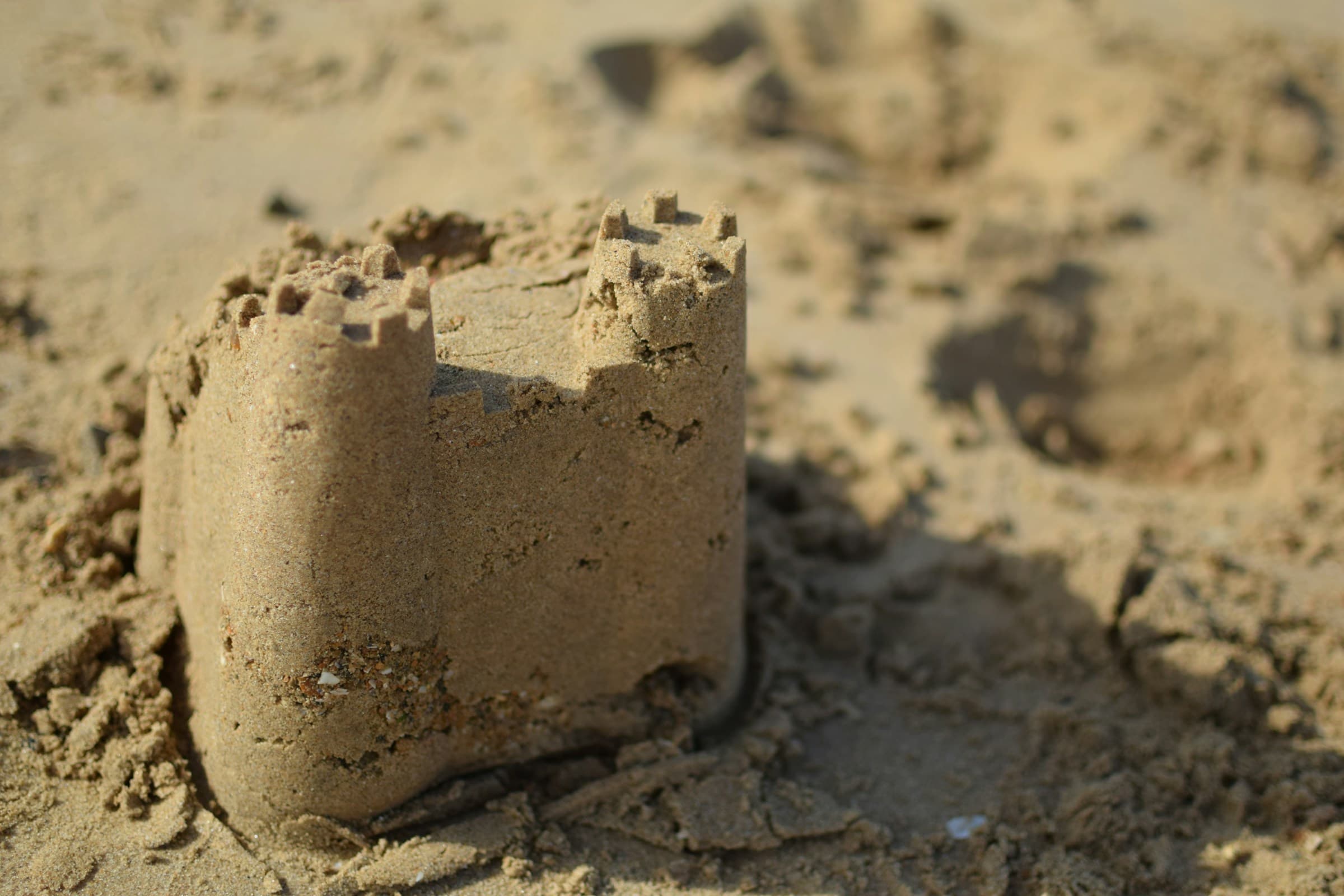
Shanklin is our top pick for building sandcastles on the Isle of Wight, with Sandown, at the other end of the same bay, a close second. Both have fine, soft sand that packs well when damp, plenty of room, and toilets, cafés and parking on the esplanade behind them. Ryde and Appley are the best choice on the north coast.
The sandy beaches are almost all on the east coast. Most of the West Wight and south-west coast is shingle or mixed sand and shingle, so if building is the plan, head for Sandown Bay or Ryde.
The best beaches for sandcastlesSection titled The best beaches for sandcastles
1. ShanklinSection titled 1. Shanklin
Fine, soft sand under the cliffs, sheltered from westerly wind, with an esplanade full of cafés and crazy golf for when the castle is finished. Bathing water was rated Excellent in 2025. Dogs are restricted on parts of the beach from 1 May to 30 September.
2. SandownSection titled 2. Sandown
A long, gently sloping sandy beach with the most room of any on the island, the pier at one end and lifeguard cover in the summer holidays. Good for sprawling builds with moats that fill from the sea. Bathing water was rated Good in 2025. Read more in our best beach for sunbathing guide, which covers Sandown and Shanklin in more detail.
3. Ryde and AppleySection titled 3. Ryde and Appley
At low tide Ryde's sands stretch a very long way out, so there is endless building space. Under the sand there is shingle, which children find if they dig deep enough. The sand higher up the beach dries out quickly in the sun, so take a bucket of seawater to keep it workable. Dogs are allowed all year at Appley east of Appley Tower.
How to build a sandcastle that lastsSection titled How to build a sandcastle that lasts
- Get the mix right. Dig down until you hit damp sand and mix it with the dry sand on top. It should clump in your hand like wet snow. Too dry and it crumbles; too wet and it slumps.
- Pack it down. Fill buckets firmly and tap them before turning out. For bigger builds, pile damp sand in layers and pat each one flat before adding the next.
- Carve from the top down. Start detailing at the top so falling sand doesn't land on finished work. A plastic knife, an old spoon and a soft paintbrush do most jobs; for serious builds see our guide to sand sculpting tools.
- Build above the strandline if you want it to survive, or right by the water if the fun is watching the tide take it.
Staying safeSection titled Staying safe
- Check the tide. On flat beaches like Ryde the tide comes in fast across the sand.
- Don't dig deep holes and leave them. Deep holes in soft sand can collapse, and are a trip hazard for other people once you've gone. Fill them in before you leave.
- Keep small children within arm's reach near the water, and swim between the flags at Sandown and Ryde when lifeguards are on duty.
For more ideas, see 24 things to do on Isle of Wight beaches and our full Isle of Wight beaches guide.
SourcesSection titled Sources
- County Press: 15 Isle of Wight bathing spots rated good or excellent (Environment Agency 2025 classifications)
- Sandown Town Council: beaches
- OnTheWight: dog-friendly beaches all year round (May 2026)