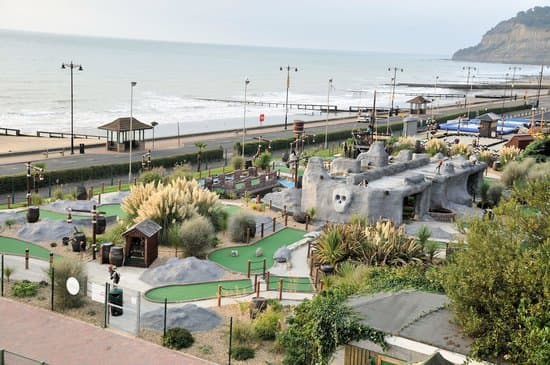
It is called the Isle of Wight because "Wight" is what the Roman name Vectis became in English. The Romans recorded the island as Vectis, Anglo-Saxon speakers called it Wiht, and by the Domesday Book of 1086 it was written Wit. The harder question is what the name meant in the first place, and the honest answer is that nobody knows for certain. There are several theories, and scholars still disagree.
From Vectis to WightSection titled From Vectis to Wight
The oldest written records of the island's name are Roman:
| Source | Date | Name used |
|---|---|---|
| Pliny the Elder | 1st century AD | Vectis |
| Suetonius, on Vespasian's campaign | Describing 43–44 AD | the island of Vectis |
| Ptolemy | Mid-2nd century AD | Vectis, "below Magnus Portus" |
| Panegyric to Constantius | 296 AD | Vecta |
| Old English, including the translation of Bede | Anglo-Saxon period | Wiht |
| Domesday Book | 1086 | Wit |
The step from Vectis to Wiht is less of a jump than it looks. In Classical Latin the letter V was pronounced like an English W, so Vectis sounded roughly like "Wectis". English speakers who took over the name kept the W sound, and Wiht became the modern Wight, still said like "white".
The Romans probably did not invent the name. Vectis is generally thought to be a Latin spelling of a name the Celtic-speaking islanders already used. That is why the meaning is so hard to pin down: we only have the name as outsiders wrote it down, not the original word.
What did the name originally mean?Section titled What did the name originally mean?
These are the main explanations. None of them is proven.
"Place of the division"Section titled "Place of the division"
This is the explanation you will see most often. A.D. Mills, in the Oxford Dictionary of English Place-Names, suggests an origin in a Celtic language, meaning "place of the division". The idea is that the island divides the Solent into two arms. It fits the geography neatly, which is part of its appeal, but it is a suggestion rather than a settled fact.
A Celtic root meaning "work" or "journey"Section titled A Celtic root meaning "work" or "journey"
Another proposal is that the name comes from a Brittonic (early Welsh-type) root related to Welsh gwaith, "work", and Irish fecht, "journey". This also treats the name as pre-Roman and Celtic, but gives it a different sense.
A Germanic originSection titled A Germanic origin
A 2010 study by A. Durham, published by the Isle of Wight Natural History and Archaeological Society, argued for a Proto-Germanic word, *wextiz, which would have been written Vectis in Latin and also lies behind words such as English "whit" (a tiny amount). This is not the usual explanation: it would need Germanic speech in southern Britain before the Romans, a possibility raised by the geneticist Stephen Oppenheimer in The Origins of the British (2006).
The "lever" ideaSection titled The "lever" idea
The Latin word vectis means a lever or bar. A medieval gloss on a manuscript of Nennius from 1164 equates the Old English wiht with the Latin divorcium (separation), and that encouraged later writers to picture the island as a lever sitting between the two arms of the Solent. It is a good story, but since the Romans were probably spelling out an existing local name, the Latin meaning is most likely a coincidence.
What the experts actually saySection titled What the experts actually say
The standard reference on Roman-era names, A.L.F. Rivet and Colin Smith's The Place-Names of Roman Britain (1979), treats the etymology as uncertain. That is the safest summary: the line of descent from Vectis to Wight is clear, while the meaning of the original name is not.
Two names it probably isn'tSection titled Two names it probably isn't
Ictis. The Greek historian Diodorus Siculus describes a tin-trading island called Ictis, and it was once often taken to be the Isle of Wight. St Michael's Mount in Cornwall is now considered more likely.
Wihtgar. The Anglo-Saxon Chronicle says that after Cerdic and Cynric took the island, it passed to their nephews Stuf and Wihtgar. It is tempting to think the island was named after Wihtgar, but the evidence points the other way: the island was called Vectis centuries before, and Wihtgar's name may itself come from a misunderstood place-name.
The people of WightSection titled The people of Wight
In the Anglo-Saxon period the islanders were called the Wihtware or Wihtwara, "the people of Wight". In his Ecclesiastical History, Bede says that the people of Kent and of the Isle of Wight were descended from the Jutes.
The name todaySection titled The name today
Both names are still in use. Wight is the official one, but Vectis turns up all over the island: the island's bus company, for one, is Southern Vectis. In Welsh, the island is Ynys Wyth.
If you are here for the island's history, Carisbrooke was once known as Wihtwarasburgh, "the fort of the men of Wight", and our museums and history guide covers the island's museums. For the island's size, see how big is the Isle of Wight, and for a common mix-up about where it belongs, is the Isle of Wight a Channel Island. For other things visitors ask, see our Isle of Wight questions.
SourcesSection titled Sources
- Roman-Britain.co.uk: Vectis (Isle of Wight) (quoting Ptolemy, Suetonius, the 296 panegyric and Mills's Oxford Dictionary of English Place-Names)
- Wikipedia: History of the Isle of Wight (citing Rivet and Smith, The Place-Names of Roman Britain, 1979, pp. 487–489; and A. Durham, Proceedings of the Isle of Wight Natural History and Archaeological Society 25, 2010, pp. 93–97)
- Wikipedia: Isle of Wight
- Wiktionary: Wiht (Old English)
- Bede, Ecclesiastical History, Book I, chapter 15 (Fordham Internet Medieval Sourcebook)
- Wikipedia: Latin phonology and orthography