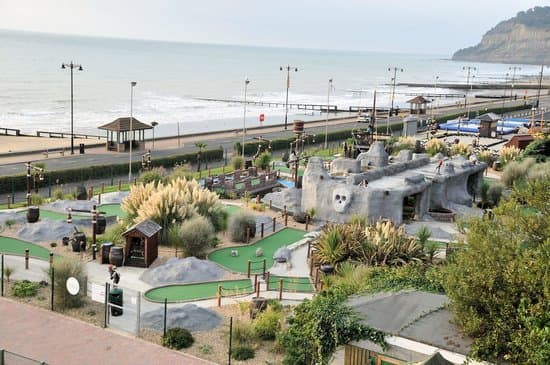
Yes, but only as fossils. The Isle of Wight is one of the best places in Europe to find dinosaurs, which is why it is often called the "dinosaur capital of Britain". Dinosaur bones and teeth wash out of the cliffs onto the beaches every winter, there are three-toed footprints at Hanover Point you can stand next to at low tide, and scientists have named several new species from island fossils since 2020. The Dinosaur Isle museum in Sandown holds the island's collection.
Why the island is so rich in dinosaursSection titled Why the island is so rich in dinosaurs
Around 125 million years ago, in the Early Cretaceous, this part of southern England was a floodplain. Dinosaurs lived, died and left footprints in the mud, and their remains were buried in layers of clay and sand. Those rocks, the Wealden, now reach the sea on the island's south-west coast, around Compton, Brook and Brighstone, and at Yaverland near Sandown. Because the soft cliffs are always eroding, new fossils keep falling onto the beach.
In 2023 Dr Martin Munt, then curator at Dinosaur Isle, said the island was "the richest dinosaur location in Europe", with 35 different types of dinosaur found there. The Environment Agency, announcing the Yaverland footprint find that year, described the island as Britain's dinosaur capital.
New species are still being foundSection titled New species are still being found
Many recent finds came from amateur collectors walking the beaches. Since 2020:
| Year named | Dinosaur | What it was | Found at |
|---|---|---|---|
| 2020 | Vectaerovenator inopinatus | A meat-eater up to 4m long, about 115 million years old | Shanklin foreshore, by three separate visitors in 2019 |
| 2021 | Ceratosuchops inferodios and Riparovenator milnerae | Two spinosaurids, crocodile-faced predators about 9m long | Chilton Chine, near Brighstone |
| 2024 | Comptonatus chasei | A plant-eating iguanodontian weighing about a tonne; 149 bones, the most complete dinosaur found in the UK in a century | The cliffs of Compton Bay, by collector Nick Chase in 2013 |
| 2025 | Istiorachis macarthurae | A sail-backed iguanodontian, named after island resident Dame Ellen MacArthur | The island's Wealden rocks |
Visit Isle of Wight lists four species described in 2021 alone (Vectiraptor, Ceratosuchops, Riparovenator and Brighstoneus), and when Comptonatus was announced in July 2024, Countryfile reported that eight new dinosaur species had been described from the island in five years. Other island dinosaurs include Mantellisaurus, the armoured Polacanthus and, according to the Natural History Museum, one of the largest meat-eaters known from Europe.
It isn't only dinosaurs. The island's rocks also hold pterosaurs, crocodiles, turtles and ammonites, and Daisy Morris found a new pterosaur on the beach at Brook when she was four; it was named after her.
Dinosaur footprintsSection titled Dinosaur footprints
Hanover PointSection titled Hanover Point
The best-known footprints are at Hanover Point, the headland between Compton Bay and Brook Bay. Visit Isle of Wight says around 300 dinosaur foot casts have been recorded on the beach there. The casts are no longer where they formed: they have fallen from the cliff, and the matching footprints can be seen in the rock above. At a spring low tide, actual trackways show in the rock ledges.
YaverlandSection titled Yaverland
In October 2023, ground investigations for new sea defences at Yaverland uncovered dinosaur footprints, probably made by a Mantellisaurus about 7m long, around 125 million years ago. They were found near the seafront car park and café, a short walk from Dinosaur Isle.
The best beaches for dinosaur fossilsSection titled The best beaches for dinosaur fossils
- Compton Bay and Hanover Point: the classic spot for bone fragments, teeth, fossil wood and the foot casts. Go at low tide.
- Brook Bay: the next bay east, with the same rocks and fewer people.
- Yaverland, Sandown: the main dinosaur site on the east of the island, and where Dinosaur Isle's guided walks begin.
- Shanklin: where Vectaerovenator turned up on the foreshore.
Collect only loose fossils from the beach, don't dig or hammer the cliffs, leave the foot casts where they are, and keep away from the cliff foot, where landslips happen without warning. Start on a falling tide so you don't get cut off. Our guide to the best beaches for fossils covers what to look for, parking and the rules in detail.
Dinosaur Isle museumSection titled Dinosaur Isle museum
Dinosaur Isle on Sandown seafront is the island's dinosaur museum, run by the Isle of Wight Council in a building shaped like a pterosaur. It holds about 35,000 fossil specimens, many unique to the island, and Comptonatus has joined its collection. It reopened in March 2026 after £678,000 of work on its roof, heating and lighting.
- Prices (2026): adult £8, child (5–15) £5, concessions £5, under-5s free; family tickets from £18. Show your receipt from the pay car park behind the museum for money off.
- Opening: normally Tuesday to Saturday, 10am to 4pm, last admission 3pm. It opens daily over October half-term, up to Saturday 31 October 2026.
- Fossil walks: guided walks at Yaverland and Shanklin, booked separately and in advance (£7 adult, £4 child in 2026).
- Getting there: Southern Vectis route 8 calls at the Dinosaur Isle stop on some journeys; otherwise get off in Sandown and walk along the seafront.
It's indoors, so it makes a good rainy-day option. For more museums, see our museums and history guide.
Our verdictSection titled Our verdict
There are no living dinosaurs on the Isle of Wight, but it is one of the best places in Europe for dinosaur fossils, and you can find some yourself. For a full dinosaur day, book a guided walk at Yaverland, visit Dinosaur Isle next door, and on another day go to Hanover Point at low tide to see the footprints. Combine it with a Sandown beach day if you have children with you.
SourcesSection titled Sources
- Environment Agency: Yaver-dabba-do! Dinosaur footprints found on the Isle of Wight (October 2023)
- Visit Isle of Wight: Dinosaur Island (checked October 2026)
- University of Southampton: New species of dinosaur discovered on Isle of Wight (August 2020)
- Sci.News: Two new species of spinosaurid dinosaurs (September 2021)
- Countryfile: "Most complete" dinosaur fossil in over 100 years discovered on the Isle of Wight (July 2024)
- Natural History Museum: New sail-backed dinosaur species unearthed on the Isle of Wight (August 2025)
- Isle of Wight Observer: Dinosaur Isle reopens after £678,000 upgrade (March 2026)
- Dinosaur Isle: Tickets and times (checked 19 October 2026)
- Dinosaur Isle: Location, access and facilities (checked 19 October 2026)
- Southern Vectis: route 8 timetable (checked 19 October 2026)